Skip to content

SimonHarlingBlog Posts

How much should I charge?

You could look at the “market rate” which is simply to compare yourself to those around you.

A friend of mine invests in property and never pays the market rate; instead, he calculates what it’s worth to him. The “never mind the market rate” relies on personal choice, circumstance, and patience. He collects plenty of “no’s” while he waits for a “yes.”

Price is a story we tell ourselves and it pays to get our story straight.

Comments closed

Nothing to see here

We can get wound up by the stories that other people tell, that are inaccurate, misleading, or in our opinion, plain wrong.

But in the end, it pays to remember that unless we have permission, the role of the assessor is not ours to assume.

Comments closed

Knowing the answer

If it’s no longer about knowing the answer then what’s the question.

Comments closed

Co-creation

The process of creating a product or service, with the end user, is co-creation.

Perhaps it starts with modeling the behaviours you would like to see.

Declaring what you are working on, taking questions, and accepting challenges.

But it doesn’t have to be just in business, or even your peer group, you can do it at home too with the kids.

Comments closed

Passionate about numbers

If you want to make a good decision about your numbers then take the emotion out of it.

If you want to find the thing you love to do, take the numbers out of it.

Accountants can write poetry and a poet can balance their books but no one wants an accountant who is poetic about your numbers.

Comments closed

Without applause

The true test of a rebel is not the cause but the lack of applause.

Comments closed

Coaching the problem

When a parent comes to you worried about what sports supplements their child wants to take. It’s clear there is a problem.

Do you support their choices, question their choices, or deny them a choice?

What about informing their choice?

When this particular parent sat down to talk through the choices, a new choice appeared, one that both parties could agree on.

Coach the person, not the problem.

Comments closed

Thinkers and Doers

Division of labour separates those who think from those who do.

The problem comes when those who think don’t do and those who do don’t think.

Together is better.

Comments closed

When to move on

Derek Jarman writes ‘ It does not matter if it is a failure. Failures are to be desired as long as they are complete, stretched to their limits.’

But why would you want to stick around?

Perhaps you move so quickly that you learn nothing, maybe you haven’t given your idea time to work, or leaving a trail of mishaps has become so meaningless, that it has become part of your mo.

Whatever the reason, it pays to sit in failure, just don’t wallow in it.

Comments closed

Who does your fighting for you?

When Tony Benn stood up in Parliament to remind the right honorable members that anyone who voted to support the war in Iraq was consciously and deliberately accepting responsibility, he was asking for skin in the game.

How do you increase your commitment to the decisions you make?

Comments closed

Health and Fitness

One describes a state of well-being, and the other relates to the ability to perform a certain task, such as running a 5k.

It is possible to be of healthy mind and body and of no interest in running a faster 5k. Similarly, you can run a faster 5k and not be of sound mind and body.

Sadly, because it’s easier to measure fitness than it is health, it is easy to forget the order in which to put things; fit and unhealthy is not as helpful as being healthy and fit.

Comments closed

What do you need to be healthy?

I’m reading Dan Cleather’s The Little Black Book of Training Wisdom as part of my research for a book idea.

A little black book is a place where you put confidential information that perhaps you don’t want to share with anyone else, and I get that. What works for you, might not work for anyone else.

But, what if, we could share what you think you need to be healthy? I’m calling on your wisdom, ideas, and words on what you think you need to be healthy. Who knows, what works for you, might just work for someone else.

Dan’s cardinal rule is “Above all else, be consistent.” Don’t do anything that might negatively affect your consistency.”

What’s yours? You can contact me here.

Comments closed

Take my advice

Finding an “expert” to tell you what to do is not nearly as helpful as doing the work to understand what you have and what you think you do. If the world feels chaotic, it’s because your thinking is chaotic. First, choose yourself.

Comments closed

Accountability

Tired of being the only one around here who seems to care?

I know I have been guilty in the past of martyring myself if things are not up to scratch.

If you find yourself being the one who does most of the thinking, talking and doing?

It might be time to let some light in:

Provide all the information required to make one decision.

Ask those involved to come to their own conclusions.

Then come together to discuss.

The alternative is to keep everyone else in the shade while you complain about being the biggest tree in the forest.

Comments closed

Each week

I thought I’d show you a copy of my weekly email that I send out to those who have subscribed to receive it.

Each week I share the things that I’ve been pondering, caught my eye, or simply enjoyed being a part of.

No nonsense. No spam. Just one email each week. You can sign up here.

https://sendfox.com/SimonHarling

Hello,

When it comes to training gains which is it? Nature or Nurture.

“Look at a loaf of bread and I put a kilo on.”

“I’m too old to put muscle on now.”

“I’m built for speed, not endurance.”

You get the idea. The hand we are dealt plays a big part, but how big no one really knows. What we do know is that placebo, positive thinking, and the willingness to surprise ourselves, have the power to change what we think.

I’m not sure you need to believe in God to believe that the serenity prayer is worth repeating:

“God, grant me the serenity to accept the things I cannot change,

The courage to change the things I can,

And the wisdom to know the difference.“

I’m going to leave you with a question:

What separates you from what you want? It’s a hell of a question, and one Lins asked my eldest Ellie, last week.

Have a great week.

Simon

P.S. I can’t remember who sent me the link for this video, but if you like mountain biking, the Outer Hebrides, and people finding their voice, you’ll love this. Enjoy.

Come along for the ride.

https://sendfox.com/SimonHarling

Comments closed

Better answers

When we ask someone a question like. Why do you do the things you do? You might get an answer like “I don’t know.”

Why did you pass the ball there? Give the ball away here? “I don’t know, I just did.”

What do you want to do? “Nothing”

You get the idea.

Describing what you don’t want helps to describe what you do want, and that comes with experience. A life well-lived.

Perhaps better answers come from better questions and a life well lived.

Comments closed

What’s on the other side?

My eldest was questioning her desire to go to parkour while riding home from school in the rain. It’s not hard to see why. On the other side was an hour-long ride in more rain before an hour of parkour and a ride home.

This is what her mum said to her: “What separates you from what you want (parkour) is getting cold, wet, and tired. If you want it, you need to recognise that, and get through it.”

You guessed it, I rode Ellie to parkour not her mum.

Comments closed

What are you going to do with the information you already have?

Yesterday, I was speaking to someone who hadn’t planned their day, had no idea what they wanted to achieve or when they would like to achieve it. And yet, just before our conversation, they had been watching a video on time management and productivity.

As obvious as it may sound, a great place to start is to decide what you already know and how you plan to use it. You might just surprise yourself.

Comments closed

Serenity

I’m not sure you need to believe in God to believe that the serenity prayer is worth repeating.

God, grant me the serenity to accept the things I cannot change,
The courage to change the things I can,
And the wisdom to know the difference.

Comments closed

There was an old lady

Who coaches the coaches coach? If we think in straight lines and linear progression, it can go on and on, and it’s hard to see the endpoint. The answer appears to always be to think bigger. Much like the nursery rhyme about an old lady who swallowed a fly. When will it ever end?

The old lady swallowed a bird to catch the spider. How absurd. If only the old lady had considered the connectivity of systems.

Comments closed

If you had to choose

Would you

A. Do a workout of the day (WOD), wear a headband, and worship Uncle Pukie?

B. Do something else instead?

Successful brands, give you a clear choice, all you have to do, is say Hell Yeah.

Comments closed

Who are you?

If you have ever asked the question, “Who am I?” and haven’t shared the answer, why not write a book?

Comments closed

Rabble

The word “rabble” describes a mob, a disorderly crowd, and, perhaps, less well-known, a group of butterflies.

The question is not how do you create a rabble, but how do you get butterflies to fly in formation.

Leadership, a common goal, and participatory fellowship differentiate a rabble from a community centred around a purpose.

Comments closed

We are our projects.

Projects point us forward. They provide us with meaning. Help shape our environment and provide us with skills.

Choose your projects. Choose your future.

Comments closed

Post-Truth

Post-truth is an adjective defined as “relating to or denoting a circumstance in which objective facts are less influential in shaping public opinion than appeals to emotion and personal belief.”

We fall for stories, not facts.

The narratives we create around who we think we are helps us make sense of our place in the world. How much our truth helps us and how much it gets in our way, is for us to decide. However; it’s worth remembering that we have the capacity to change our story.

Comments closed

Agency

The dictionary defines “agency” as the capacity of an individual or a group to act independently, make choices, and have a significant influence on their actions and decisions.

How do we coach others if we act on what they tell us they want? Are we giving away our agency? Maybe that is what we really want, because if it doesn’t work, then it’s not our fault.

I’ve turned to design thinking for the answer. Design thinking is a process for solving user problems, using an iterative approach to create innovative solutions. A way of shifting from the intentional thinking of the designer to the intentional action of the user.

No one designs a chair by committee, or worse still by listening to what everyone thinks. Instead, designers watch how people interact with their designs; they watch what people do.

Comments closed

Every day is a school day

Sure. But are you learning what people want you to learn, or are you learning what you need to learn?

The magic happens when we realise we don’t have what we thought we had.

Humility is a price worth paying.

Comments closed

Just tell me the good news

Today I had a conversation with a coach who was quick to tell me how many girls are signed up to play football for his club. And yet, in the age group he was talking about, the stats tell us that participation falls off a cliff. I couldn’t figure out exactly what was bothering me, about the conversation, until I had walked away.

Then I got it.

A bad coach wants to be left alone, an average coach wants to learn and a good coach wants the truth. The problem, of course, is that there are a few versions of the truth, and which one we use, will depend on the story we are telling ourselves.

Subjective truth is your truth.

Normative truth requires an outside view, not the view from the rock that you are hiding under.

Finally, there is the objective truth which can be measured and verified.

A good coach not only wants the truth, they know the difference between good news and the truth.

Comments closed

Goldrush

Never trust anyone who will sell you a shovel and tell you where to dig but is not there digging with you.

The richest people during the California gold rush of the 1850s were those who sold shovels, land, and hope.

It appears that hope is only in short supply when people are trying to sell it to you.

Comments closed

To be smart watch the other hand

Last week I was lucky enough to watch ex-world champion Nick Matthews play an exhibition game at my local squash club, Rhiwbina.

On the one hand, Nick is one of the best to have ever played the game of squash, and on the other, I got to watch an athlete prepare rigorously for a game of no consequence.

Comments closed

The bare necessities of life

Here are a few things that I have learned while trying to get my ideas out into the world.

Don’t approach the top table; unless you can improve their status, which is unlikely.

Don’t try to please the merry-go-round of “busy” industry opinion leaders for the same reason. You don’t need an echo chamber.

Do approach people from outside your industry who are curious and like ideas, not your success.

Do find the underdogs in your industry, the students, and the “doers.”Talk to them.

Finally, remember the bottom of Maslow’s hierarchy of needs is way more important than any top table. Just ask anyone who had to fake it to make it.

Do yourself a favour and go find the early adopters, underdogs, and fire starters.

Comments closed

You get what you reflect

You don’t need to be confident that your changes will work, but you do need to be courageous.

The last line from the Principles of Community Engagement For Empowerment.

“We must challenge perceptions of our professional role as ‘experts’ and have
the courage to focus on the changes needed within our own organisations
before trying to enact change within communities.”

Comments closed

Zoom out to zoom in

The joint-by-joint approach explains why a practitioner may treat your knee by first looking at your hip and ankle.

There is no point looking for the solution in the same place you found the problem.

Comments closed

Practice

The expected way of doing something.

Not because you feel good because the sun is shining, or because your team won, but because it’s the way you do things.

Once you see that we are subject to “occasion noise”, that is to say, how we are today is likely to be different from how we were yesterday, you get to decide if it’s the practice we are interested in, or how we feel that day.

Comments closed

We suffer more in imagination than in reality

Full disclosure: I like bikes. I once rode from Canada to Mexico because I thought it sounded like fun. And I imagine you think I would be okay with my kids to riding to school. But I wasn’t.

I know what it’s like to ride my bike in the rain. 

I also know how much resilience is required to ride my bike every day.

Not to mention, organising your kit takes discipline.

Have I mentioned the look people give you when you tell them you don’t have a car?

My kids wouldn’t like it, and they would hate me for making them ride to school.

People in cars don’t like people on bikes; I didn’t want to put my kids in danger.

My kids would be exhausted by the time they got into school; it would be too much for them.

I would be asking much of them making them ride their bikes every day. 

Did I mention punctures?

I thought my kids would hate the Welsh weather, they don’t, I do. They are too busy laughing and talking to notice. 

My kids find it easy to get up and organise themselves. Signing them for being late is a thing of the past, like traffic jams.

The other kids want to ride in with them and their teachers can’t do enough for them, while the parents think my kids must be superheroes in disguise. 

It took my kids a few weeks to get used to riding in; it took me longer to relax and stop worrying about them.

It’s harder for me because I can imagine how hard it would be for you.

Tx: Cardiff City Cycle I’m grateful for the opportunity.

Comments closed

8 out of 10 cats

Whiskas cat food once claimed that 8 out of 10 owners said their cats preferred it.

In a noisy marketplace, it can be difficult to stand out, and so it’s tempting to do something different. A product that does it quicker, cheaper, louder, or better than the others. But how do we know, what to believe and what to pay attention to?

Standards are helpful, rules are better, and unlike cats, results speak for themselves.

Comments closed

Fortune Cookie

We don’t eat fortune cookies because we enjoy the taste of them; we eat them because we want to know what happens in the end. Of course, neither you nor the cookie, know how it ends, but that’s not the point. The anticipation, joy, and fun of it all, matter more than the accuracy of the prediction.

For those of us in the youth sports business; we would do well not to confuse what we do with the fortune cookie business. That said, we need to find a way to bring enrollment, commitment, and tension in a manner that matches the fortune cookie experience.

Comments closed

Precisely how accurate are you?

Agreement can be an illusion, as a group, we can all agree on the same thing and yet be no closer to the truth.

Comments closed

Who is in the room?

Every time someone walks into or leaves a room; it’s a new room, with different dynamics, different status roles, and a different way of making decisions.

It’s worth considering who’s in the room and what role they want to play.

Comments closed

If you are good enough then you are old enough

The advantage of being an early maturing athlete is well known. James Vaughan was 16 years old when he scored his first goal in the Premiership in 2005. The idea is that in a meritocracy, talent, and competence take precedence over chronological age.

However, it’s becoming increasingly obvious that sports have not always been on a level playing field, and now is the right time to talk about what “good enough” really means.

Comments closed

What’s the cost?

Reading the work you wrote yesterday before you write anything today comes at a cost.

However, if you are prepared to pay, then it’s a principle in and of practice.

Comments closed

AI and me

I didn’t see it coming, but now it’s undeniable Chat GPT and I are friends.

I input words like “proofread”, “thoughts” and “summarise” along with the text that I want ChatGPT to review.

I’ve occasionally missed a comma, and sometimes the words are in the wrong order. However, every so often, I get a comment like, “Your text is well-written and engaging.” Who doesn’t need a friend like that?

Comments closed

Take, make, and waste.

When we take an idea or a resource, create something from it, and then discard it, we are thinking in straight lines.

The dairy industry was once such an example before it realised that one of its waste products, whey, had greater commercial value than the food product itself.

Joined-up thinking might feel slower and less productive, but in the end, it results in less waste.

Comments closed

Three pot approach to life

The questions that serve me well on a daily basis.

For understanding a little bit more about yourself and how you co-exist with the world. What am I creating?

For physical and mental well-being. What am I tolerating?

For family and friends. What is it like to know me?

Comments closed

Well meaning but not helpful

Maybe you want to ride from Canada to Mexico on a mountain bike, and everyone else thinks it’s a bad idea.

Or, you have a business idea that is waiting to be done.

Whatever your idea is, you will know (or will soon find out) that family and friends might think your idea is stupid. They want the best for you and that means not failing, losing money, or getting eaten by a bear.

Here is my advice for family, friends, and business partners. Be interested. Ask questions and avoid opinions.

What does success look like?

Has anyone done this before and what did they learn?

What’s your quit?

That way, rather than pass on your concerns, you are thinking it through together and that might just be what everyone needs.

Comments closed

The future is regulated

One look at the Premier League Elite Player Performance Plan EPPP and it’s clear that the goal is to industrialise the production of homegrown talent.

If you include the 12 teams in the Women’s Super League, that’s 104 teams, all approaching the problem of developing young players in much the same way.

The task is to develop and share best practices. But that’s not the hard part. The hard part is treating people like humans while working in a system that expects you to think like a robot.

Comments closed

Pyrrhic victories in youth sport

A Pyrrhic victory is a term used to describe a victory that comes at such a high cost that it almost feels like a defeat. Sadly in youth sport (and parenting), the costs mount up, and defeat only shows up when it’s too late. The horse has bolted.

Here are a few examples worth thinking about:

Age group international honours.

Fourteen years olds back squatting bodyweight +.

Coaching your kid’s age group.

Comments closed

Hurdles or opportunities

When you have not got buy-in for your project, making adjustments, is painful.

When the work is to create buy-in to your project, the adjustments are easy.

Comments closed

From the ground up

In physical rehabilitation, crawling is considered a reset. Being on all fours is a useful regressive step for people who are in pain. Crawling can help patients reconnect with their surroundings, improving coordination, balance, and sensory development. 

Aligning your timing, actions, or steps with your surroundings is rarely bad advice.


Comments closed

Knock Knock

More times than we like to imagine, we shut ourselves off from ideas, opportunities, and connections.

And yet, you would never answer your door by shouting, Go AWAY.

Instead, you accept the offer and ask. “Who’s there?”

Comments closed

The upside of writing

There will come a point at which you realise most of what you write is shit and that’s when you start treating your ideas like placeholders – successive approximation.

Comments closed

Show don’t tell

There’s a rule in copywriting that says “Show don’t tell“. By allowing readers to draw their own conclusions, the writer creates engagement.

In coaching, there is a shift away from direct instruction, for much the same reason.

However, the argument over whether we should show people or tell people is missing the point.

Equally critical is the practice of providing people with information before they form an opinion, a crucial step in sound decision-making.

Comments closed

The first time

Might be your only chance to hear what the other person is really thinking.

Share the information, encourage them to form an opinion, and then ask them about what they see.

Who knows? It might just be the perspective you’ve been waiting for.

Comments closed

Raising curious kids

The kid who has the lead role in the school play, the school rugby team captain, and has 10 A* stars in GCSE.

No, not that kid.

The one, who asks questions, accepts challenges, and has taught themselves to play guitar.

Give me that kid.

If we want to change this crazy culture of ours we need to start paying attention to success that looks like failure and not failure that looks like success.

Comments closed

Glitching

The good news is that everything is working well. That’s what we want to hear. What we don’t want to hear is that the project has been plagued with glitches since we started.

It’s clear that NHS managers don’t want whistleblowers.

Fans of football clubs don’t want to see their team concede possession of the ball.

And that if we are going to hear about the bad news it’s better to put it between two pieces of good news.

Is that really what we expect?

Perhaps it’s time to talk about the possibility that we can win a football match with less possession than the opposition. And that glitches in the system are exactly what we expect and want.

The alternative is to suggest that we aren’t paying attention unless it’s good news.

Comments closed

Street racket

Street Racket is a pretty simple idea. The idea is that you can play it anywhere. All you need is a bat and a ball.

Here is a pretty simple idea for coaches of any sport that involves hitting a ball:

Hitting an object is one of the ten athletic skills listed in the Athletic Skills Model. You showing up at a school with the intention of helping kids do just that, ensures that only nine more skills need covering that year.

Don’t seek any business or participation target improvements, simply remove barriers to kids regularly hitting an object.

By not obsessing over one skill, hitting an object, over the other nine you have clearly demonstrated an interest in the rounded physical development of children above the success of the sport you love.

That is your reward.

A chance to put the people you coach before the interests of yourself and your sport.

One school. One act. One down, nine to go.

Pass it on.

Comments closed

One and done

An artist paints a canvas and moves on.

Art stands for itself.

The artist does not stand next to their work in an attempt to convince you of its merit.

I am beginning to feel the same way about writing a book.

One idea is to write a page at the back of the book about how to use it.

For example, choose a passage from the book to read aloud to a group. Then let the rest of the group talk about what it means to them before it’s your turn to talk about why you chose the passage.

Comments closed

I don’t care that pink is your favourite colour.

If the rule is that you don’t eat breakfast cereal that colours your milk then pink milk is not an option. However much you like the colour pink. That’s the rule.

If the guidance is to eat healthy, then just maybe pink is fine as long as the milk is organic.

If you aren’t making progress, but repeating the decision, first check the rule book.

Comments closed

Free might not be the point

Today I visited the Grange Pavillon, a project in the centre of Cardiff, which is hoping to bring the community of Grangetown to the table.

If you have an idea, rooms can be booked for free and if you want to start a club there is no reason why not.

Getting started is not the hard part. Now more than ever, the freedom to act is with us.

No, the hard part, is not getting started, the hard part is figuring out how you are going to act, once you start.

What are the rules going to be in your playground?

Comments closed

Ought to be

Talking about what it ought to be is not the same as talking about what it is and what it could be.

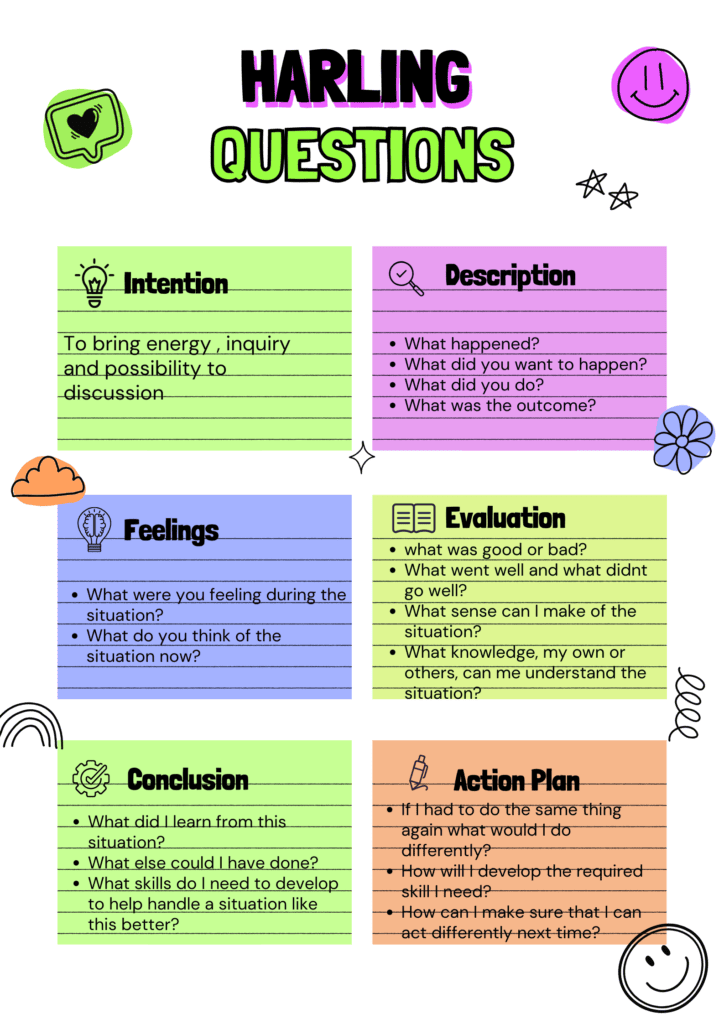
I’ve found the Gibbs Reflective Cycle to be helpful in this regard.

Comments closed

Oooh obstacles!

On summer break my kids have been designing obstacle courses for themselves. From hanging, climbing, kicking, ducking, leaping, jumping, to running. They have even drawn out various hopscotch formats using chalk on the local tennis courts.

But, perhaps my favourite time during the summer holidays has been drafting in other kids and families to make up uneven, non-bio banded, community kickabouts on a smalled sided 5 a side pitch.

My observation for this summer?

Get to the park, get people together, and play.

P.S. Get Catrin’s mum on your side, if you can, she bagged three goals last week.

Comments closed

Open book management

For many of the decisions we make, we prefer intuition, to deliberaton.

I wonder if that’s because we would rather not share what the gut is thinking.

Comments closed

Yes Club

An independent thinker doesn’t follow the crowd.

Which is odd because there is wisdom in crowds.

But the maverick knows that there is only wisdom in crowds that are capable of independent thought.

To make progress, connect independent thinkers to a network, rather than focus on assembling a group that merely agrees with each other.

Comments closed

Leadership

The skill of leadership is to hold two opposing views and still create a way forward.

Comments closed

The expert problem

It’s not what you know it’s what the person you are teaching learns. That’s the problem.

Comments closed

Legit

A chef who doesn’t taste their own cooking is not as good as a chef who does.

Comments closed

Pay off

When will the work you did today, pay off?

Friday can’t come soon enough, for the worker.

The creative lives in the hope that their payday will soon come or in fear that maybe it won’t.

But perhaps the best place to be is neither wanting nor needing but simply doing.

Comments closed

The act of publishing

An author is a writer who has published their work.

Evidently, it’s not the task of writing, it is the skill and environment necessary to commit to the practice of shipping your work that makes the difference.

Comments closed

Threshold Guardian

A maximal exercise test helps you find the point of departure or transition from extensive to intensive.

I’ve run hundreds of maximal exercise tests. And the question asked at the end of each stage prior to an increase in exercise intensity was. Do you want to go up?

Because anyone who puts themselves through a maximal exercise test is nuts or naive and sometimes both. The answer was usually, YES!

A metaphor for life. If you want to achieve your goals. Go above and beyond to find out more about what you are doing.

Comments closed

The next best thing

When we fail at being a sports star the next best thing might be to become a coach.

And the opportunity to be the next best thing has never been bigger.

More academies.

More elite structures.

The next best thing is big business.

We don’t risk anything by helping others to be the next best thing.

It is up to the next best thing, not us, now that our chance has gone.

And maybe the next best thing is exactly that, the next best thing.

But if the best thing is to settle.

Perhaps it’s time to find the thing that is really the next best thing.

Comments closed

First aid training

The point of First Aid Training is to give you belief in your actions so that you can then help someone else (if required).

To give me the belief I needed to write my book I’ve kept coming back to the idea that I am writing the book that only I can write. And that is more important than being the best in the world.

Pass it on.

Comments closed

Fingerprints

Success is not the same for everyone. What success looks like for you, your clients, and your project, will be as unique as your fingerprints.

And since your fingerprints are all over the stuff you touch.

Don’t you think you should spend some time, thinking about what success will look like?

Comments closed

When the customer is not the user

When a parent pays for a kid to train at your place. Who is the customer?

You could be forgiven for thinking that you have two customers. But you don’t.

The customer interacts with your offer and the end-user interacts with the service you provide.

Much like an entrepreneurial sports coach has a business practice and a coaching practice.

The trap is when you confuse the two.

A focus on one will take care of the other. The question is. Which one?

Comments closed

Training manuals

Training manuals make us think of long lists of things we need to do better.

A friend of mine told me he doesn’t want a coach because they will only give out more things to do.

Coaches and training manuals equal more of the stuff we know we need to do but don’t.

Nobody needs a reminder about what we can’t do.

We would if we could, but we can’t.

But just maybe, that’s thinking about it the wrong way around.

What if we started with a blank sheet of paper and put down the one thing we needed to do above all else?

Once that’s done.

What’s different? What’s changed? Do we need to do it again, only quicker, slower, or more often?

People do extraordinary things when they take responsibility for doing the ordinary well.

Comments closed

Coaching types

A speed coach helps you go faster. “Drive your arms and your legs will follow.”

A systems coach might ask you to consider time differently. “What might be an appropriate time horizon for understanding this system that we are working on?”

And a Krav Maga coach will spend time walking through drills. “Master the movement and the speed will come.”

Fast – Slow. Long – Short. Now – Later. There is no one way. But getting clear on what is expected will help.

Comments closed

The problem with idiots

If it is true that any idiot can find a problem I’m happy to accept that any idiot can offer a solution.

What is the matter with you? This is a question that both problem-seekers and problem-solvers ask.

A better question might be.

What matters to you?

Because when we figure out what really matters, most problems have a habit of no longer mattering much at all.

HT Jamie

Comments closed

How do I get people to listen?

Nobody wants an incompetent surgeon to operate on them and yet it is the surgeon with a terrible bedside manner who has the most trouble with malpractice lawsuits. 

We want a well-trained pilot to fly the plane but it’s the reassuring voice before take off that we need to hear. 

Well-educated people are valued in society, and are easy to spot, they have certificates on the wall, but for those with soft skills that make a difference, there are no certificates that can capture what you do. 

When I quit all my accreditations, I was not turning my back on everything I had learned, I just didn’t see the point, in continuing to educate myself when I wasn’t paying any attention to developing myself. 

Change the system, change the behaviour. 

The question How do I get people to listen? This is a question that I had been trying to answer all of my coaching life. I didn’t know it until other coaches asked me the very same question, and then I stopped to think about my answer. 

How DO I get people to listen?

I used to think being an “expert” was enough. I conflated being an expert with being a coach. I did that by answering an easier question since the real question was too difficult. How do I become an authority within my field?  

People listen to authority. Ok, some people listen to authority. No, you are right, most listen when it suits them but only if it suits them. 

I’ve changed the question. This question came to me, at the bottom of the pit, with no income, no accreditations, and no coaching practice. It’s the question that I kept coming back to when writing this book.  

[Note: This blog is taken from a draft of my forthcoming book Good Coach Bad Coach.]

Why would anyone want to listen to me?

Maybe it’s a question that comes from a place of self-doubt but it is also from a place where status and certificates don’t mean very much at all. And that’s the place I want to come from as a coach. Not a place of authority or expertise but a place of enrollment, empathy, and service.   

I need to earn the right to coach from scratch each and every time. 

If you could start again, knowing what you know now. Why would anyone want to listen to you? 

Change the question. Change the system. Change the behaviour.
Comments closed

Are you sitting comfortably?

Then we’ll begin.

The opening line from Listen with Mother, a BBCRadio program for kids.

Before anyone is ready to listen to your story it might be worth listening to theirs first.

Comments closed

Eye of the storm

Found at the centre of a storm, the eye of the storm is a region of calmer weather.

And while all about you lose their heads, you keep yours because you know the storm will pass.

You got this.

Comments closed

What can we expect to see?

Science looks to change the answer from “We don’t know” to “This is what we do know.”

Thinking, questioning, and challenging what we expect to see is part of the deal.

Comments closed

Albert Hindsight

If you know you know but more often than we imagine we know only once we know, despite what we tell ourselves.

A simple maxim from the brilliant book Noise.

If you can’t accurately predict what happens next, you don’t know.

This brings me to youth sports.

If it’s not true that we can predict how successful a kid will be in a sport then we should stop doing it.

Instead, we can focus on things that we can predictably influence, like decision-making.

Comments closed

Where have you put yours?

Fear is misplaced attention.

Be mindful of what you are paying attention to.

HT Once again to Patricia Ryan Madison.

Comments closed

Keep out

I’ve just come across a new term, for me at least, “the ugly zone”.

Alongside the term “imposter syndrome” it reminds me that I shouldn’t be entering into this world where I don’t belong.

The caretaker in the haunted house in Scobby Doo tried a similar thing with a scary mask and ill-fitting costume.

Let’s have it right.

We all know you don’t learn to swim with your feet still touching the bottom of the pool.

Time to get out from behind the sofa and throw open the curtains.

Comments closed

Power

Power is the amount of work that can be done over time.

Some say work less and enjoy your time more.

Others tell you to do more work in less time.

Perhaps the real power is deciding what to do with the time that you have got.

Comments closed

Showing up

Showing up is a good start.

Showing up with intent is better.

And if you are going to show up with reluctance I’d rather you quit.

But, if you can’t get out of it, get into it.

Comments closed

Buyer beware

Why not ask the question.

What is it like to know me?

That way you can make the buyer aware instead.

Comments closed

Everything and nothing

Want for nothing and you have everything you need.

Have everything you want and you have nothing you need.

Comments closed

What follows

River Phoneix wrote, “Run to the rescue with love and peace will follow.”

Leading with intent asks us to pick something and then lead with it. The question is. What follows?

Recently, I’ve been having an internal struggle with Play Their Way. Not because I don’t think The Rights of Children are not important, they are. But, what follows?

McDonald’s doesn’t start a healthy eating campaign because they care about healthy eating, they do it because they hope it will ease the guilt of parents ordering happy meals. It’s just a campaign. And if it doesn’t work, the chopped-up apples in bags disappear and they go back to just selling burgers and fries.

And now realise what my issue is.

Play their way is a campaign and campaigns come and go.

The opportunity is not to tell more coaches to give kids a voice that’s what campaigns do.

Rather the hard part is to show that by changing what we do we change what we get.

Do you think McDonald’s would still be selling burgers if they found out they could make more money selling apples?

Success comes from showing it works not spreading the word.

Comments closed

Washout

The washout effect in clinical studies is the time it takes for a drug to pass through a patient’s system.

Or, the time it takes for the status quo of the system you are working in to crush your ideas, concepts, and way of working.

People like us don’t do things like that.

Ship out or wash out the choice is yours.

Comments closed

Seeing and noticing

You might have seen something but what have you noticed.

Paying attention is active, it involves all your senses and sensibility, not just eyes to the front.

Comments closed

Ten rules for writing

Ten rules, most of them not mine, that I’m playing with.

  1. Two steps forward and one back. Improve what you wrote yesterday then write today’s text but not before you read what you wrote yesterday aloud.
  2. Write to pass on ideas.
  3. Write for change
  4. If you can’t summarise your idea in less than a minute you don’t understand it
  5. Know the narrative arc. It starts with want and ends with need.
  6. Write until you have something that surprises you.
  7. Offer a fork in the road. Ask your readers to choose to go with you.
  8. Take a cliche turn it around and have fun with it.
  9. Combine two things and show your readers something new.
  10. Say what you mean
Comments closed

Which part do you enjoy?

What keeps a writer coming back to the text if they are full of self-doubt about the validity of their work?

What can we expect to enjoy if we are impatiently waiting for the end result?

In the end, our craft breaks us and then makes us.

Enjoy the process.

Comments closed

Self Propulsion

Last night we celebrated the end of another school year.

Not once were my kids late for school.

And yet, as parents when we were responsible for driving them in, occasionally we would be late.

I guess it must be pedal power.

Comments closed

Can’t see the wood for the trees

Noble words are not the same as noble deeds.

Building a zoo because you are concerned about climate change and biodiversity is a bit like buying insurance on the Titanic from someone on the Titanic.

Comments closed

The need for sophistication

If you are a PE teacher, researcher, or coach it won’t be long before you come across the word “affordance”.

Based on a person’s physical capabilities, affordance refers to all the things you can do with an object.

For example, a skipping rope turns into a game of tug of war, high jump, and limbo.

And yet most kids I meet can’t skip.

Before we replace naive simple ideas with complicated ones backed by experts it pays to find out if we understand the simple ones first.

Comments closed

Symbiosis

Sports are individually funded to drive up participation numbers.

Of course, the hope is that the whole, an active nation, is greater than the sum of its parts.

But, when I see rugby coaches practicing set moves with children in the middle of summer, I can’t help but imagine that competition rather than mutualism is the interaction of choice.

Comments closed